Millions of traders · 25 exchanges · 4,000+ markets · Codebashing security champion 2020
Frontend for a crypto trading terminal used by millions.
Cryptowatch was a widely-used real-time charting and trading terminal, acquired by Kraken and later integrated into Kraken Pro. Supported millions of active traders across 25 exchanges and 4,000+ markets.
Overview
Cryptowatch was Kraken’s real-time charting and trading terminal — millions of active traders, 25 exchanges, 4,000+ markets. I joined as a senior frontend engineer in August 2020 and stayed through November 2022.
This case study covers the high-impact work on the trading surface itself: the multi-exchange trading form, the cockpit redesign, the leverage slider, and the security work that came alongside it. For my work on Coderunner — the trading-automation product inside Cryptowatch whose frontend I took over and rebuilt — see the Coderunner case study.
The problem
The trading surface is the unforgiving part of crypto frontend.
A leverage slider that snaps to the wrong step costs users actual money on a real position. A trading form that rounds the wrong way on the amount field misprices an order. A cockpit that lags by 100ms on a fast-moving market loses traders to competitors with better tooling.
This is high-traffic, mission-critical infrastructure with direct visibility to executive leadership. The standard isn’t “works on my machine” — it’s “works the same way on every device, every network, every market state, every time.”
What I built
Chapter 1 — The multi-exchange trading form
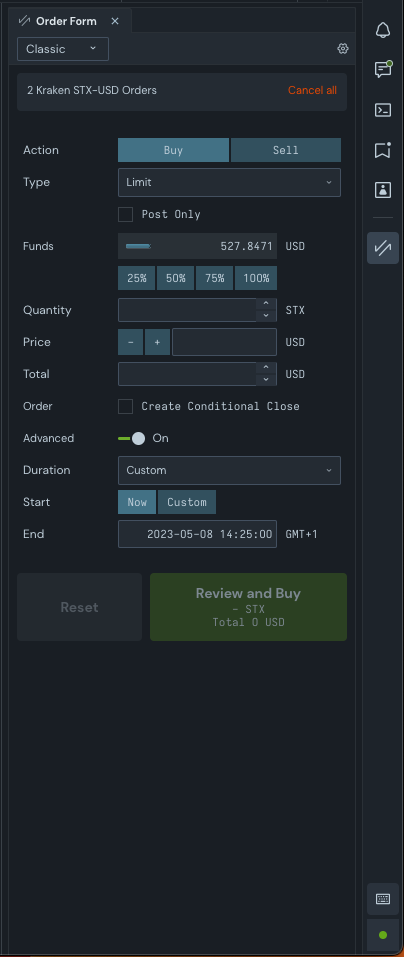
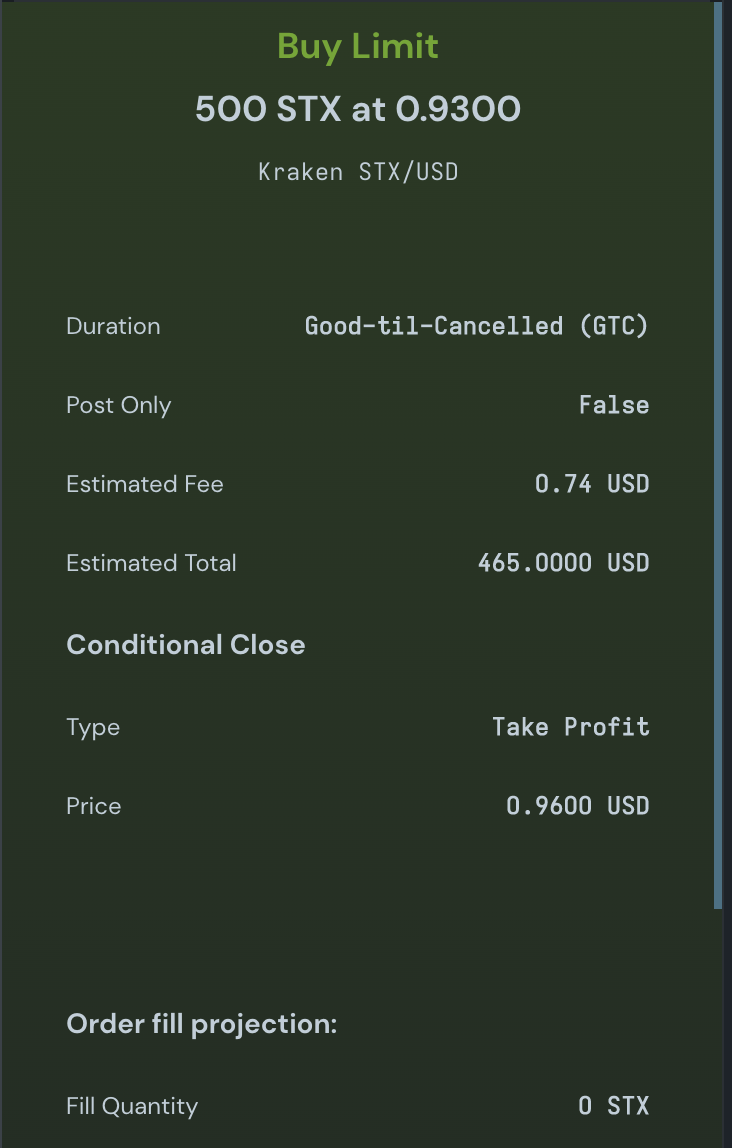
The multi-exchange trading form was the primary trade-execution surface. Users could select an exchange, a market, an order type, and submit — across 25 exchanges’ APIs, each with their own quirks around precision, minimum sizes, and rate limits.
The form’s hardest problem wasn’t the UI. It was making 25 different exchange APIs feel like one consistent interface to the user, without leaking the underlying inconsistencies. Asset-precision rules vary per exchange. Order minimums vary. Some support post-only flags, some don’t. The form’s job was to normalise all of that into a single confident UX.
Chapter 2 — The cockpit redesign
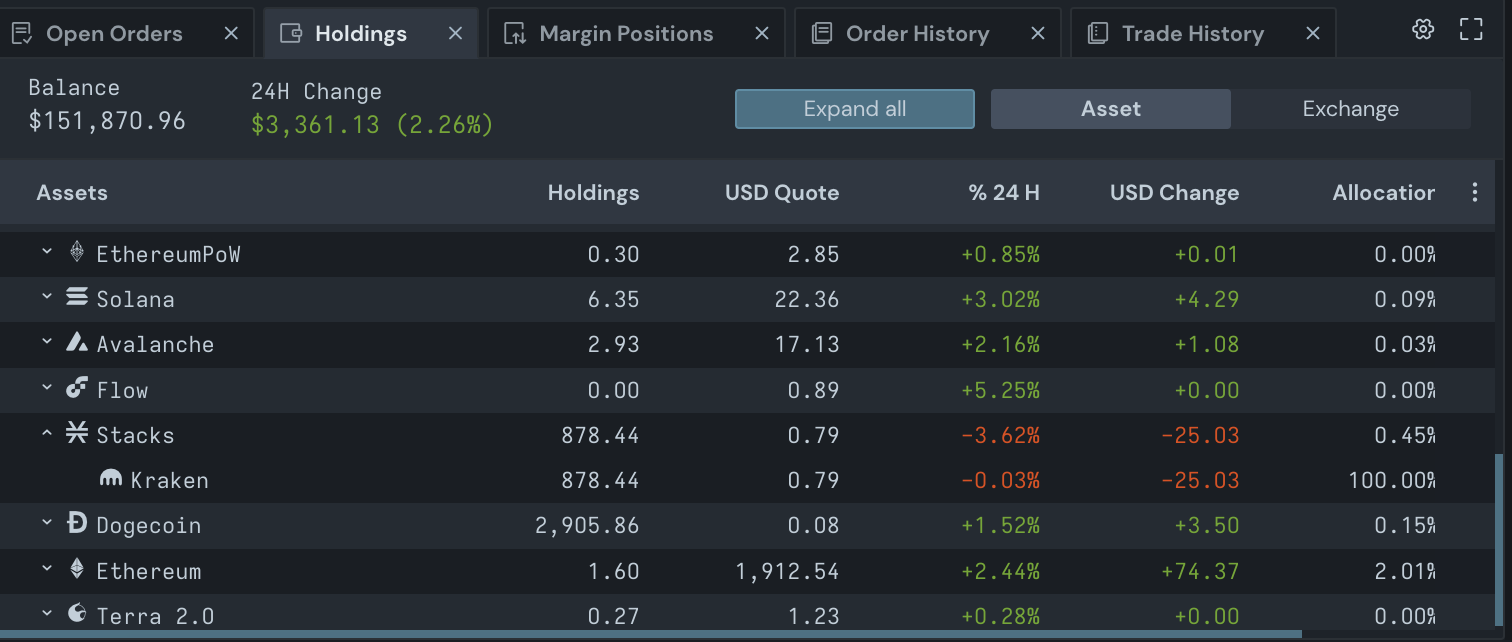
The cockpit was the trader’s command center — multiple charts, an order book, recent trades, account balances, open positions. The redesign reorganised the layout for higher information density on widescreen and a sensible collapse pattern on narrower viewports.
The trickiest part was the realtime data fan-out. With multiple panels subscribing to overlapping WebSocket streams, naive component-level subscriptions burned both bandwidth and CPU. The redesign moved subscriptions up to a shared layer with reference counting, so opening a fourth chart on the same pair didn’t open a fourth WebSocket.
Chapter 3 — The leverage slider
The leverage slider sat between the user and a leveraged position. Wrong by a step and the user trades more (or less) margin than they intended.
The slider had to handle continuous drag, keyboard step, and direct numeric input — all consistent. Validation had to reflect the exchange-specific max leverage for the selected pair. Visual feedback had to make the committed position obvious vs the currently-dragging preview.
(If you got rekt on Cryptowatch between 2020 and 2022, sorry about that, statistically speaking it was probably my slider.)
Chapter 4 — Codebashing security champion 2020
I won Kraken’s company-wide Codebashing security challenge in 2020, placing first across the engineering organisation for expertise in client-side vulnerabilities and OWASP mitigations. On a real-money trading platform, that mattered — XSS, CSRF, prototype pollution, and credential-handling missteps are all attacks with real financial impact for users.
The Cypress E2E testing framework I initiated as a side project became part of the team’s regression baseline. Trading UI tests caught classes of bug that unit tests miss — race conditions in the order-submission flow, focus-management bugs in modals, mis-rounded amount displays.
Outcome
A trading form serving millions of users across 25 exchanges. A cockpit redesign that shipped without regressions. A leverage slider that, when it worked correctly, didn’t make the news. A security challenge first-place finish. A regression-testing baseline that outlived my time on the project.
The thing that holds up isn’t the components themselves — it’s the bar. Trading UI is the surface where “good enough” isn’t. Every shipped change cleared that bar.
Outcome
Multi-exchange trading form delivered to a millions-of-users surface · Cockpit redesign shipped · Leverage slider rebuilt for real-money trade execution · Cypress E2E framework initiated and adopted as regression baseline · Won Kraken's company-wide Codebashing security challenge 2020 — first place across the engineering organisation.